What is Radiation Therapy?
Radiation therapy is a powerful form of treatment that can cure cancer in many people. In others, it can prevent the disease from returning and shrink tumors to ease symptoms.
How Does Radiation Therapy Work?
Radiation therapy is a common and effective treatment for cancer that uses high-energy radiation, such as X-rays or other types of energy waves, to target and destroy cancer cells. By damaging the DNA within the cells, radiation therapy can prevent cancer cells from growing and dividing, leading to tumor shrinkage. This reduction in tumor size can help alleviate symptoms caused by the tumor, such as pain or pressure on surrounding organs, and in some cases, may even lead to a complete remission of the cancer.
What to Expect?
After all potential short-term and long-term side effects are thoroughly reviewed with you, you will be asked to sign a consent form to move forward with radiation therapy. The next step is a CT Simulation, the team will work with you to position your body correctly for treatment, ensuring that the positioning can be consistently replicated. The images captured during the CT Simulation are used to develop a personalized radiation therapy plan tailored specifically to your needs.
The planning timeline may differ based on your specific diagnosis, but we can assure you that our team will keep you updated and informed throughout every step of the process. Once you begin your radiation therapy treatments, you will meet with your nurse and doctor at least once a week to address any questions or concerns and to monitor for any potential radiation side effects.
How We Use Radiation Therapy to Treat Cancer.
Radiation therapy may be used in various ways depending on your specific diagnosis. Your doctor will discuss the most suitable treatment plan with you, including the benefits and risks involved.
At St. Elizabeth, our team follows the latest practices to ensure your care is both safe and effective. Radiation therapy may be recommended as your sole treatment or in combination with surgery, either before or after, or alongside chemotherapy.
Radiation therapy can also be used to treat certain non-cancerous conditions.
Your Radiation Therapy Team
You are the most valued member of your treatment team. Your radiation oncologist will review your treatment options and help you make the choices that are best for you
Your radiation therapy team also includes:
- Radiation Oncologists – Specialize in treating cancer with radiation. They create the treatment plan, radiation dose, and method of treatment.
- Medical Physicist – Ensures all of the radiation equipment and machines function safety quality standards. Also works to calculate the precise radiation dose to be delivered.
- Dosimetrists – Works closely with radiation oncologist and medical physicist to calculate the radiation dose going to the tumor.
- Radiation Therapists – Set patients up on the treatment table and operate the radiation.
- Radiation Nurse – Specializes in educating on radiation and managing side effects and support throughout the journey. Functions as a liaison between patients and rest of your care team.
- Radiation Nurse Practitioner – Collaborates with radiation oncologist by performing assessments, managing side effects, and education before, during, and after your radiation.
- Radiation Medical Assistants –Assist the nurse and radiation therapist in providing care for you throughout your journey.
- Nurse Navigators – Registered nurses who work directly with you and other members of your care team to navigate you through diagnosis, treatment and survivorship.
- Patient – The most valued member of the team, at the heart of everything we do.
Radiation therapy team members work closely with others of your care team outside of radiation oncology to make your experience as well-coordinated as possible. In addition to providers listed above, we offer supportive services from dietitians, social workers, chaplains, speech therapy, physical therapy, and many others. All of us are dedicated to providing the best care for you individually.
Types of Radiation Therapy
-
External Beam Radiation
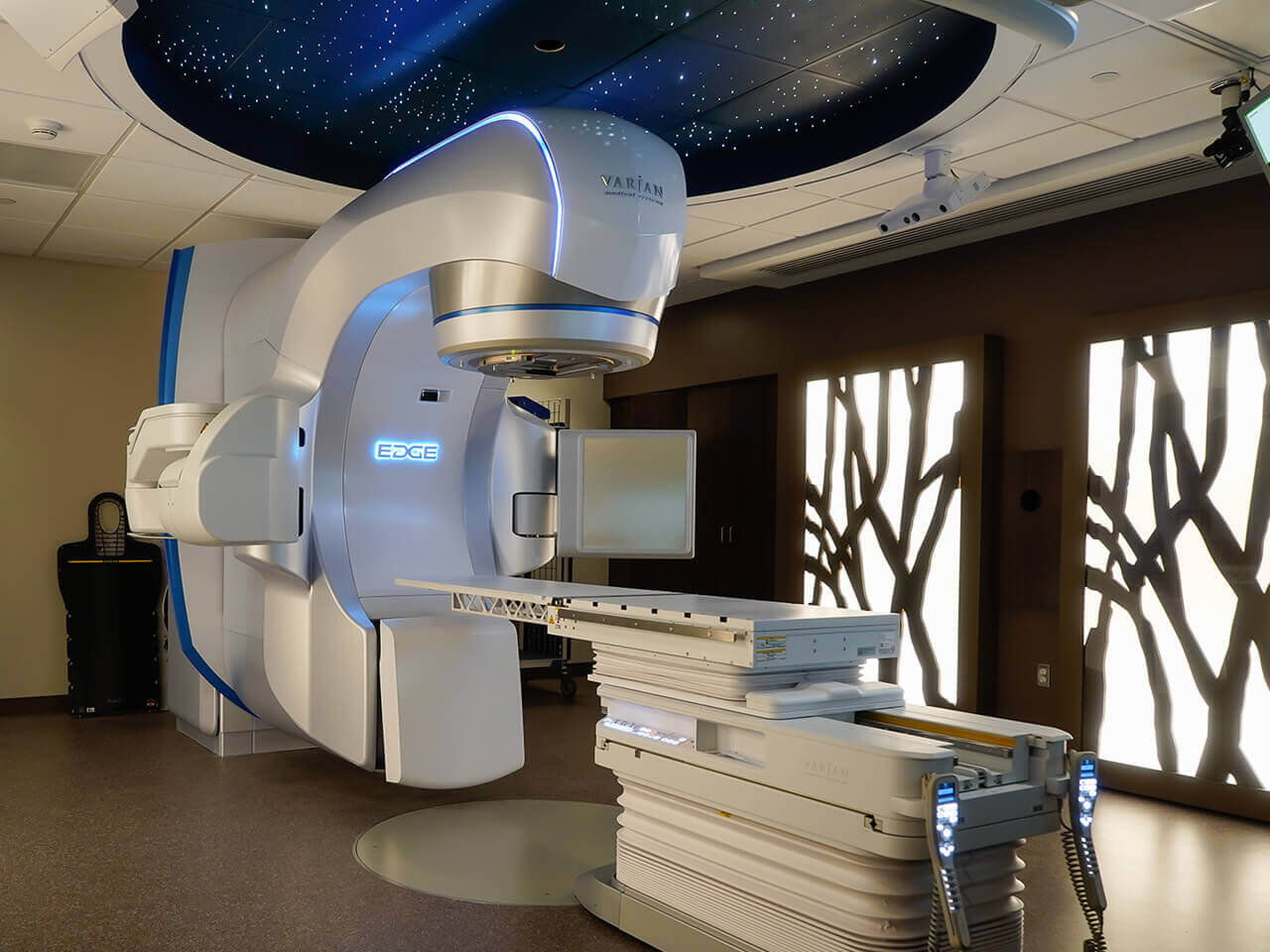
External beam radiation delivers precise beams of energy at the cancer from outside your body. It uses a large machine called a linear accelerator.
This therapy involves coming to the treatment center up to five times a week for several weeks in a row. The radiation passes through your body during treatment sessions. Your body is not radioactive at any time.
St. Elizabeth offers state-of-the-art linear accelerators to deliver precise treatment for your cancer type. Our clinical team will personalize the right treatment for you. The advanced technologies and techniques allow us to deliver high-energy radiation to cancer cells while sparing healthy tissue.
-
Stereotactic Radiosurgery/Radiotherapy
Stereotactic Radiosurgery (SRS) and Stereotactic Radiation Therapy (SRT) are advanced forms of radiation therapy that enable us to deliver high-dose radiation to a small, precisely targeted area. Both SRS and SRT focus the radiation solely on the tumor, either killing the cancer cells directly or disrupting their ability to grow.
SRS delivers a large dose of radiation in a single session, while SRT involves a series of treatments spread over multiple days. Although the total dose in SRT may be higher than in SRS, each individual treatment day in SRT delivers a smaller dose. Both methods are primarily used to treat localized tumors in the brain.
-
Stereotactic Body Radiotherapy
Stereotactic Body Radiation Therapy (SBRT) is a technique that delivers high doses of radiation to a tumor in just a few treatments, with each session using a large dose. The typical treatment schedule consists of two to five sessions spread over one to two weeks.
-
Internal Radiation (Brachytherapy)
Internal radiation, also known as brachytherapy, involves placing applicators or radioactive seeds inside the body for a brief period. This method delivers targeted radiation directly to or near the tumor. Brachytherapy can also be applied to the surface of the skin to treat skin cancers.
Your radiation oncologist will determine the best approach to access the treatment area. The goal is to maximize the dose of radiation to the tumor and spare healthy tissue. Brachytherapy can happen alone or alongside other forms of treatment.
With internal radiation therapy, your care team can use higher doses of radiation than would be possible with external radiation. An advantage of brachytherapy is that less radiation goes to the healthy cells and a higher dose goes to the cancer cells. Another advantage is a shorter recovery time.
Common Side Effects of Radiation Therapy
Side effects of radiation therapy vary depending on the area being treated and the organs within the treatment field that may be affected. Common side effects include fatigue and skin changes in the treated area, such as redness, itching, and peeling. The severity of these side effects depends on several factors. Your care team will discuss both short-term and long-term side effects with you and provide guidance on how to minimize them during treatment.
A New Option for Joint Pain Relief
St. Elizabeth Healthcare is proud to offer low-dose radiation therapy (LDRT), an innovative, noninvasive treatment for osteoarthritis and other joint conditions. Many patients experience meaningful pain relief and improved mobility after just a short course of treatment.
Learn how LDRT may help you get back to the activities you enjoy.
Frequently Asked Questions About Radiation Therapy
Our Commitment to You
The St. Elizabeth Healthcare Radiation Oncology program is accredited by the American Society for Radiation Oncology (ASTRO) APEx-Accreditation Program for Excellence®. This accreditation demonstrates our commitment to your well-being and providing you with safe, high-quality care. St. Elizabeth Healthcare is the first healthcare system in Kentucky to receive this recognition.
Call Your Oncologist
Talk to your oncologist or contact the Cancer Care team at (859) 301-2238, option 1.