A New Lease on Life from a Robotic Surgery Close to Home
Sarah’s Surgery Story
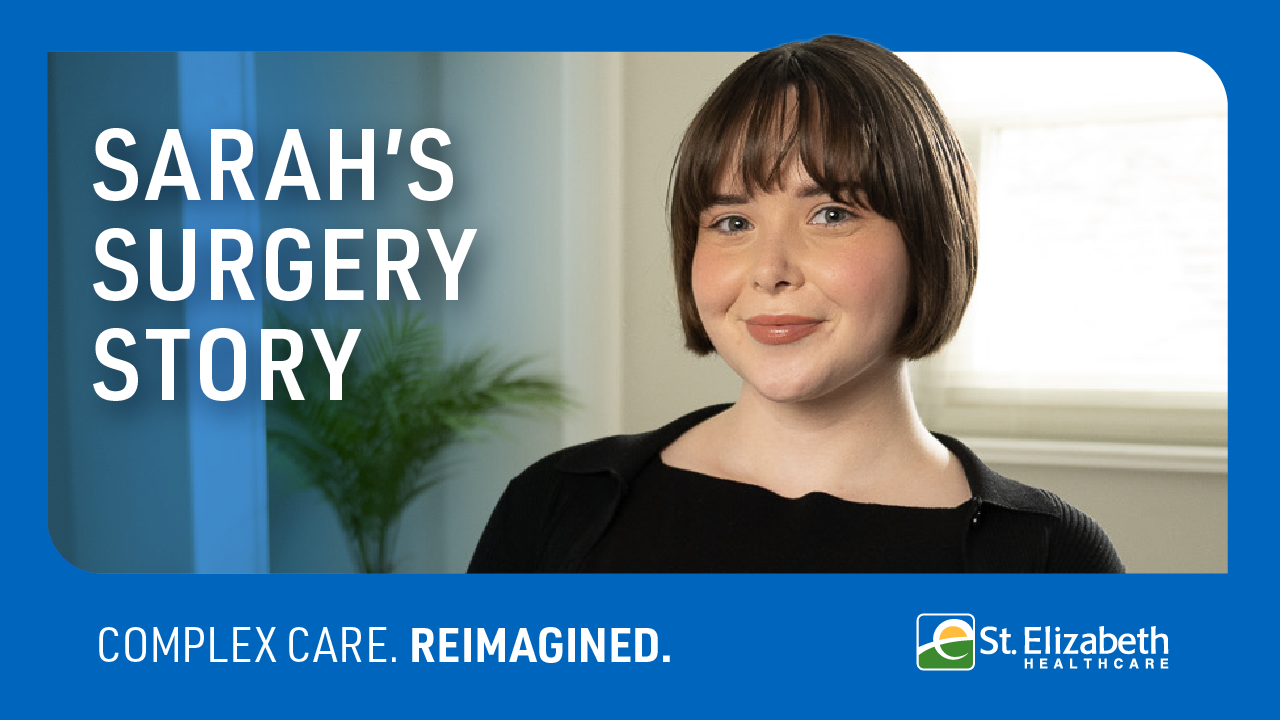
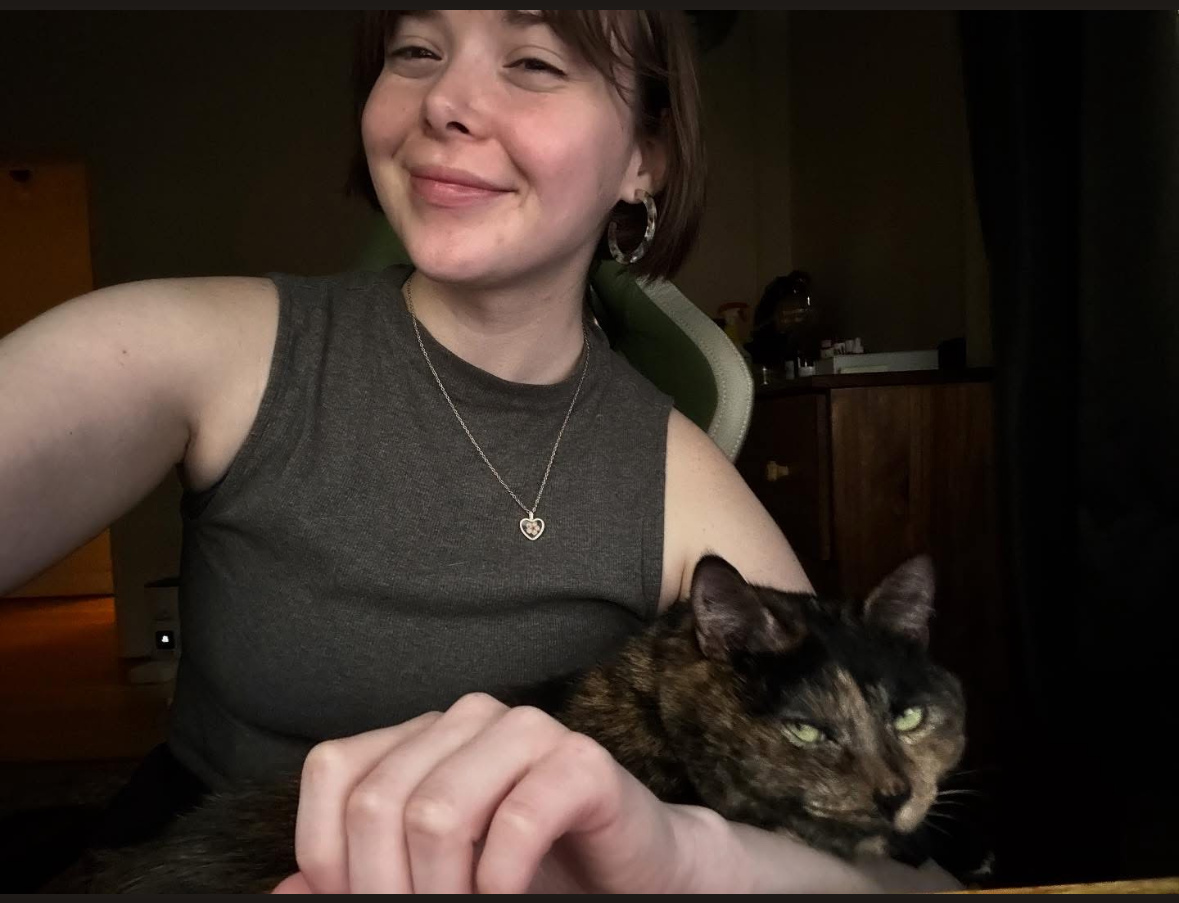
From age 8 through early college at Northern Kentucky University, life was as normal as it could be for Sarah Parlow. Medications and steroids kept her ulcerative colitis under control.
Then the medication stopped working and her carefully crafted routine fell apart.
Simple things became complicated. Severe symptoms disrupted her life, and she was gripped by fear that traveling, working or enjoying her favorite activities would become distant memories. She faced a choice — go multiple rounds of trial-and-error in hopes of finding another effective medication or have surgery. The idea of having a major procedure in a hospital far away felt overwhelming. Her search for care led to an unexpected location. World-class robotic colorectal surgery was waiting for her at St. Elizabeth Healthcare, 10 minutes from home.
A Worsening Condition
For Sarah, getting an infusion of the biologic medication Remicade every six weeks through high school and part of college was the norm. It kept her ulcerative colitis symptoms and the inflammation in her colon at bay. She lived life without constantly worrying about her condition, until, one day, she couldn’t.
“When Remicade stopped working for me, it was really difficult to come to terms with. It was my first time having to navigate what it was like to have a medicine stop working, try the new one and having to manage and suffer while figuring out if that new medicine was going to work,” she says. “So, it was daunting. It was scary.”
Contact Us
To learn more information about Colorectal Surgery or to schedule your consultation, call (800) 737-7900.
For six months at a time, Sarah tried new medications. While she struggled, she developed a new routine. She would wake up several hours early just in case she got sick before work. If she got sick in transit, she returned home, texted her boss and re-started her day. It took four or five extra steps to complete tasks that a person without ulcerative colitis could do with ease, she says. And her condition just kept deteriorating.
“I really knew things were getting dramatically worse when I was driving home from visiting my parents. They were stationed in Georgia at the time, and I had done this drive multiple times,” she says. “It’s a long drive, but I always made it. This time, I had to stop to deal with the symptoms of ulcerative colitis so much that I didn’t know if I was going to make it.”
Shortly after that trip, on New Year’s Eve, she was hospitalized for the first time since her diagnosis. That’s when her doctor, Mustapha El Halabi, MD, a Gastroenterologist at St. Elizabeth, told her surgery was the only way to stop her symptoms and reclaim her life. Sarah worried finding top-notch surgical care meant traveling far from home. Dr. El Halabi reassured her that wasn’t necessary. The expertise she needed was closer than she knew.
“Closer than imagined has taken on a new meaning because I truly didn’t know I could get such high-quality care right here,” she says. “I didn’t expect to be so pleased with my surgery experience.”
A Life-Changing Robotic Procedure
By the time Sarah arrived for her surgical consultation, her ulcerative colitis had become severe, says Jai Bikhchandani, MD, a Colorectal Surgeon at St. Elizabeth. Although she appeared healthy, her insides were suffering.
“Ulcerative colitis causes severe inflammation in the entire body. Her colon was dying from that inflammation such that she was having miserable side effects and needing a lot of heavy, heavy-duty steroids to control her symptoms and keep her in a functional situation,” he says. “She also had significant blood loss, due to which she was becoming more and more anemic.”
Dr. Bikhchandani presented two surgical options. Sarah opted for an ileostomy, a surgically created opening in the abdominal wall that allows waste to collect in a bag (called an ostomy bag) attached to the outside of the body.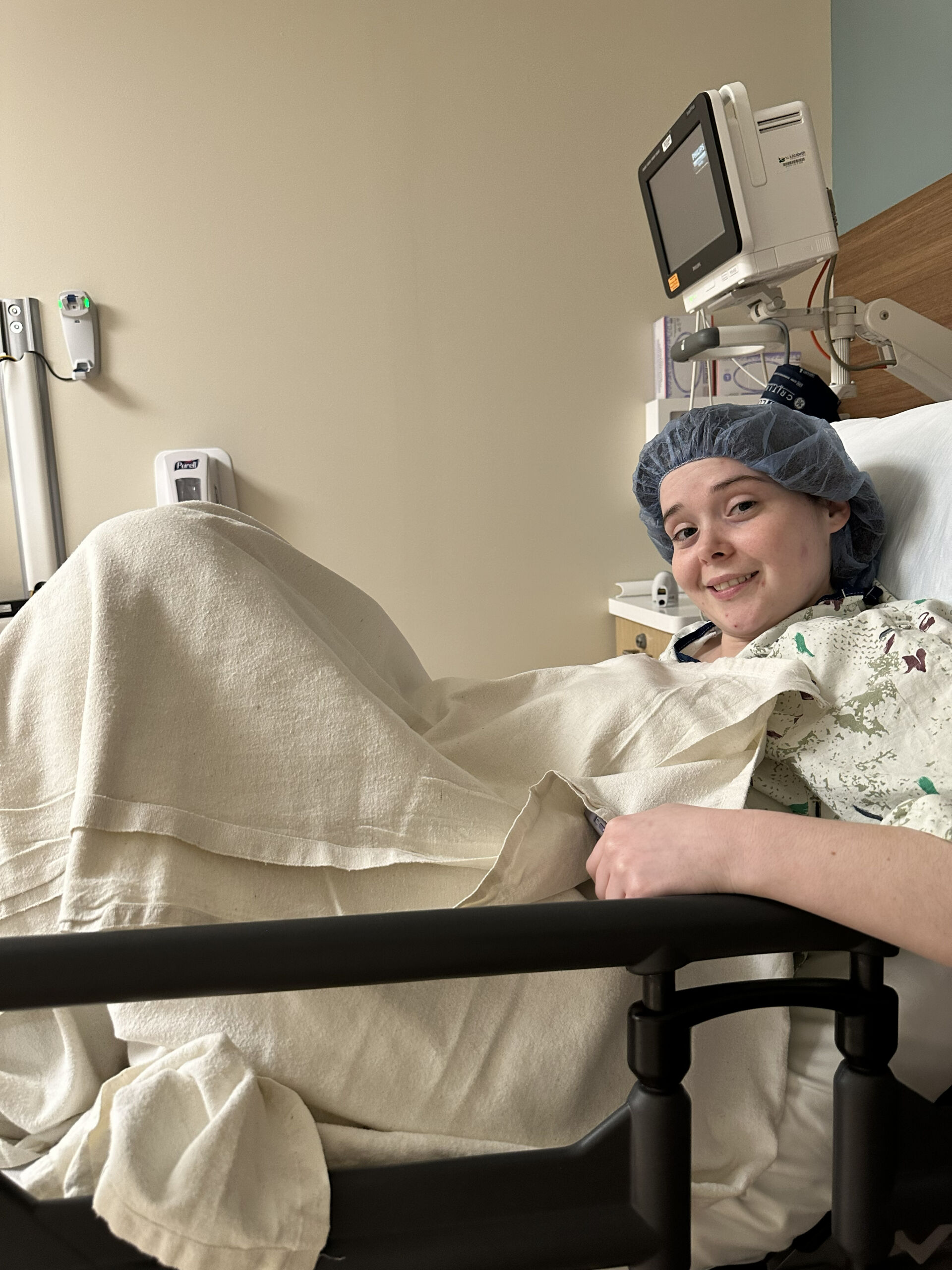
“I explained to her that living with an ileostomy is something which will give her a control over her life, over her symptoms. She’ll be able to function as a normal human being,” he says. “She’ll be able to work. She’ll be able to go out to restaurants, spend time with her friends.”
To perform the procedure, Dr. Bikhchandani used leading-edge robotic techniques. This minimally invasive approach uses surgeon-controlled robotic arms to complete procedures with greater accuracy, flexibility and maneuverability. As a result, Sarah’s surgery involved fewer incisions, less pain and a quicker recovery. Within a few days, her symptoms disappeared and she had a new lease on life.
“The most important thing about getting the surgery was having a sense of stability because I was always waiting for the next shoe to drop. I guess with ulcerative colitis, even if I had a good day, I was worried if tomorrow was going to be another really bad day,” she says. “Now, with the ostomy bag, I have full control over how I feel for the day. I just have this free space in my brain that was filled with taking care of my health before. It’s now free for so many other things.”
An Innovative Surgery Team Close to Home
In the last 10 years, Dr. Bikhchandani says St. Elizabeth has become a regional robotic surgery leader. With 10 world class robotic da Vinci surgical systems, the hospital system conducts one of the largest numbers of colorectal procedures in the region.
“We’ve made significant progress and patients are now acknowledging that we have the world’s best care, which is available through a robust colorectal team,” he says. “We have six providers under our team who take excellent care of our patients. They don’t have to travel far and wide at all and leave the region for their treatments.”
Access to this level of advanced, innovative surgery makes it easier for patients to get the sophisticated, compassionate care they need.
“You can’t put a number on how important it is for patients to stay in the region. They have family and friends and people supporting them all around. After surgery, patients sometimes have to make a few trips to make sure they’re healing well, recovering well and following all the directions,” he says. “So, going to a center which is several hours away and coming back, locally, it is a downside in so many ways. I think it’s priceless to have the care close to them so that they can move on with their lives as soon as possible.”
Life-Altering Care Just Down the Road
For Sarah, having robotic surgery to treat her ulcerative colitis was life-changing. Finding that high level of care in her own backyard made having the surgery even easier.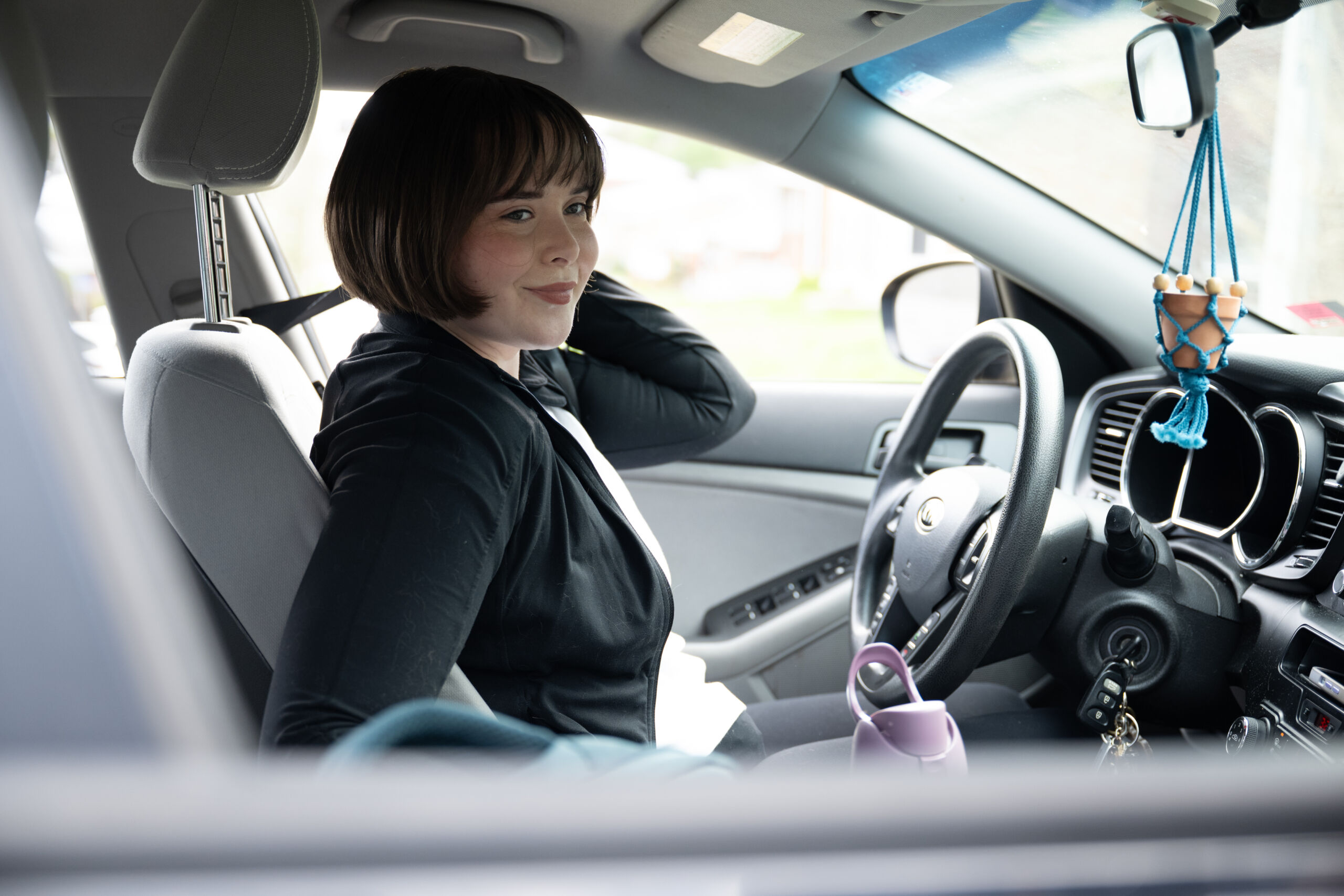
“It felt like I was rediscovering so many little parts of life. Just being able to jump in the car and listen to a song, take an extra lap around the neighborhood because I didn’t have to run to the bathroom. I could finish the song that I wanted to sing in the car. I could try spicy food, which I could never in my entire life eat,” she says. “In other ways, I really, truly was getting to do new and better things because of the ostomy bag.”
The care that gave her so much back wasn’t far away, it was right down the road, closer than she ever imagined.
If you need surgery for a colorectal condition, call (859) 578-5880 to schedule an appointment or find a doctor today.